
Let’s be real. Most people think of Korean food as just a glossy parade of K-BBQ, spicy Tteokbokki, and crispy Fried Chicken. But if you want to understand the true K-lifestyle, you must explore the shocking Korean food found in local markets and historical traditions that require real courage to understand.
We’re talking about live seafood, powerful fermentation, and textures that will redefine your definition of “food.” Today, we’re exploring the 5 most shocking Korean foods that make foreigners do a double-take—insects included!
“While you’re planning your food tour through the city, make sure you’ve also checked out the best spots to visit with our Seoul K-Pop Guide to balance out the thrill!”
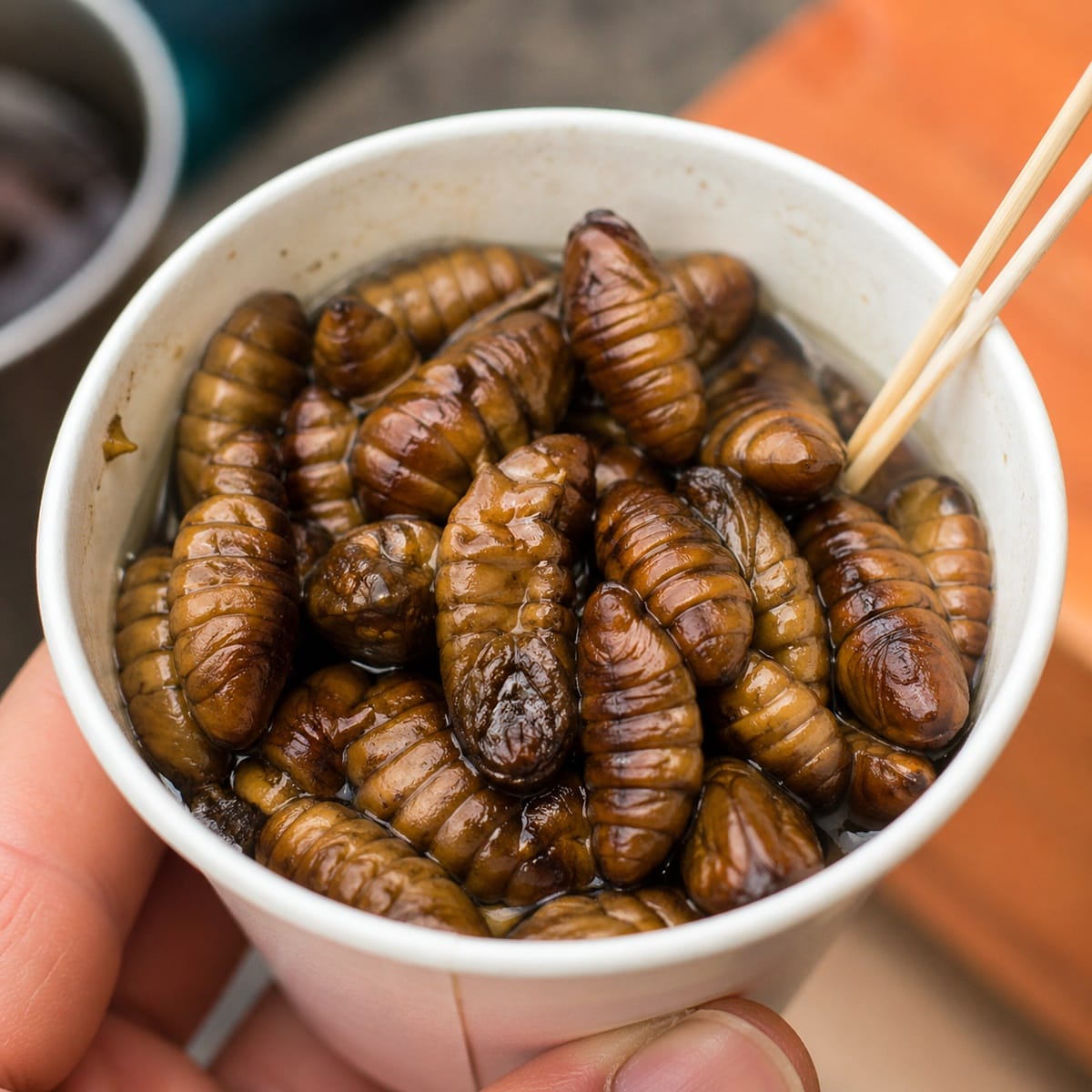
1. Beondegi (The Insect Snack Challenge)
This is the item that creates the most immediate shock: boiled or steamed silkworm pupae.
- The Vibe: For many Westerners, the idea of eating insects is a massive psychological barrier. It has a strong, earthy aroma and a “poppy” texture.
- The Reality: It’s a nostalgic, protein-rich snack often sold at parks and traditional markets.
- Nutrition Fact: A dense source of high-quality protein and essential amino acids.
- Why Koreans Eat It: It’s a savory, nutty, and traditional street snack loved for its earthy flavor.
2. Sannakji (The Moving Octopus Experience)
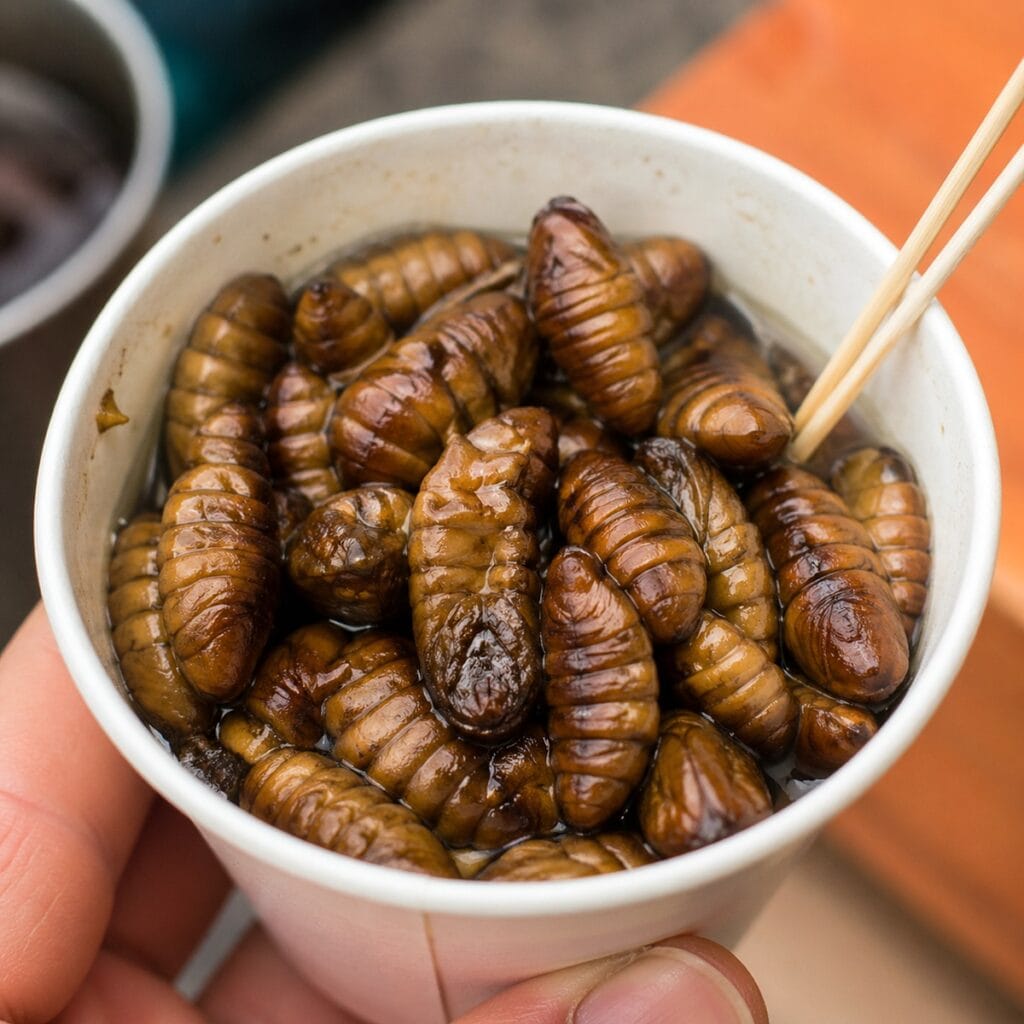
Perhaps the most famous “horror” food in Korea. The octopus is chopped immediately before serving, so the tentacles are still moving on the plate.
- The Vibe: The wriggling tentacles and active suction cups make it look like a survival challenge.
- The Reality: It’s the ultimate symbol of freshness. It tastes clean and nutty due to the sesame oil.
- Nutrition Fact: Exceptionally high in Taurine, which helps reduce fatigue and supports liver health.
- Safety Note: You must chew thoroughly! The suction cups can stick to your throat if swallowed too quickly.
3. Hongeo-hoe (The Ammonia Kick)
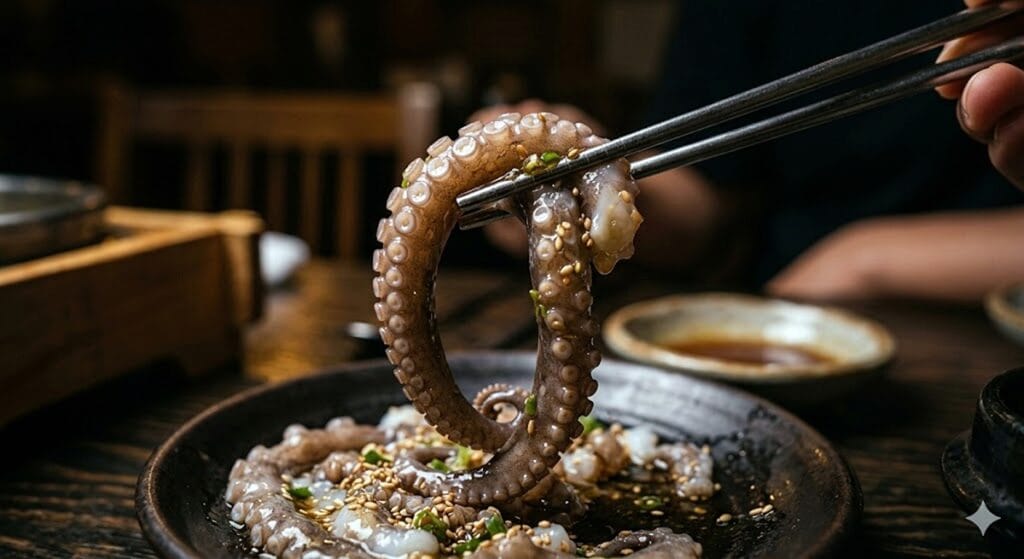
This is fermented skate. The shock comes not from the look, but from the pungent, ammonia-like aroma that defines this dish.
- The Vibe: The smell is often compared to industrial-strength cleaning supplies or aged blue cheese.
- The Reality: A deep regional specialty from southwestern Korea. It’s best enjoyed as Hongeo Samhap (with pork and kimchi).
- Nutrition Fact: Rich in Chondroitin sulfate, which is excellent for joint health and cartilage repair.
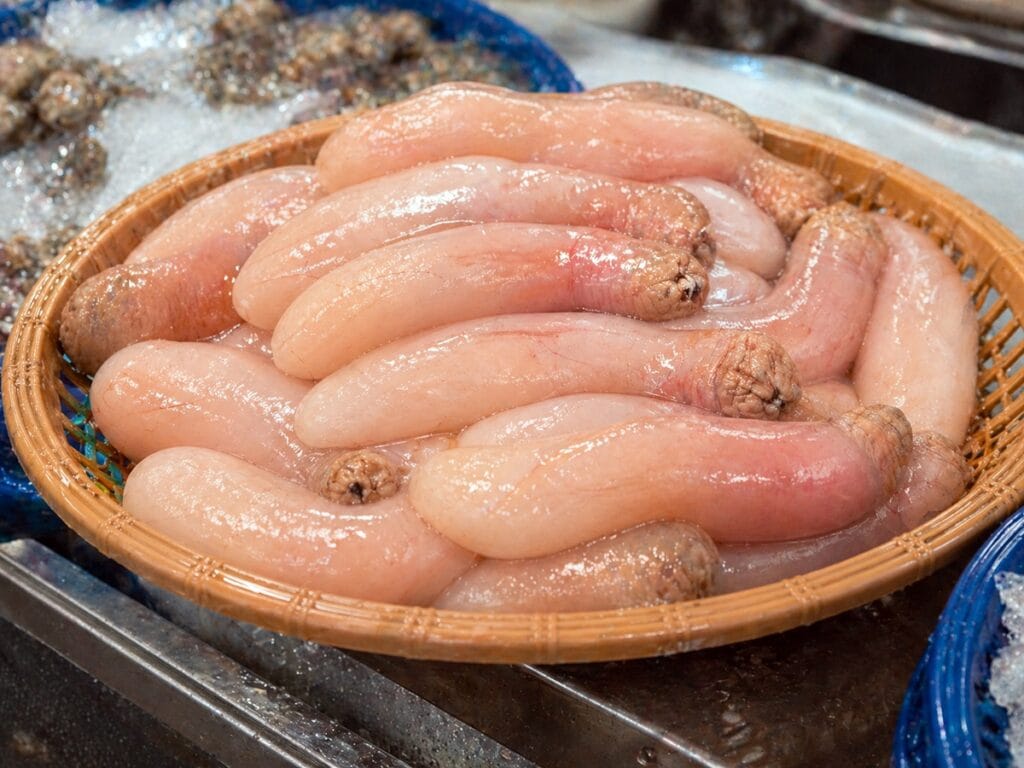
4. Gaebul (The “Sea Penis” Visual Shock)
Often called the “spoon worm,” this seafood surprises foreigners purely with its unusual, pulsating pink appearance.
- The Vibe: Its long, soft, and glossy body displayed in market tanks makes everyone stop and stare.
- The Reality: It tastes much milder than it looks. It’s sweet, fresh, and has a wonderfully crunchy/chewy texture.
- Nutrition Fact: Notably high in Aspartic acid, which aids in detoxification and boosting metabolism.
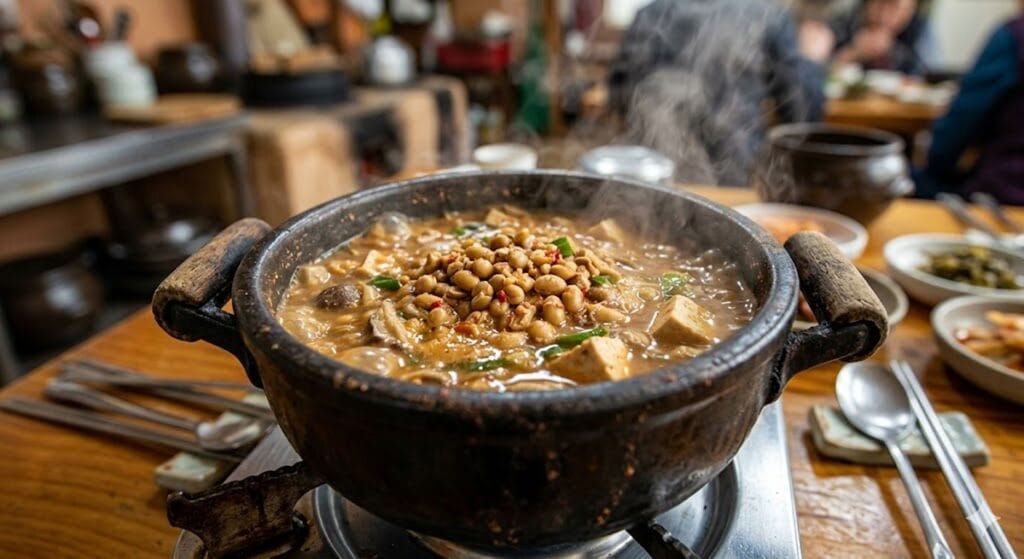
5. Cheonggukjang (The Legendary Smelly Stew)
It looks like a normal stew, but the moment you smell it, you’ll understand why it’s on this list.
- The Vibe: A powerful, pungent fermented soybean aroma that can fill an entire building.
- The Reality: A hearty, comforting soul food packed with tofu and vegetables.
- Nutrition Fact: Contains Bacillus subtilis, a powerful probiotic that survives stomach acid to improve gut health.
“If these unique flavors have sparked your curiosity about local traditions, don’t stop here. Explore more immersive
K-Culture Experiences in Seoul for 2026.”
Korean Food Challenge Guide: How Brave Are You?
Don’t jump straight to the hardest shocking Korean food challenges. Use our level guide to test your limits.
Level 1: Beginner Challenge
- Menu: Cheonggukjang
- Reason: It’s a warm, cooked stew eaten with rice. It looks like a normal meal, making it easier to handle the strong smell.
Level 2: Medium Challenge
- Menu: Hongeo-hoe & Gaebul
- Reason: You have to overcome the smell (Hongeo) or the visual (Gaebul). They are definitely “exotic” but don’t involve the shock of movement or insects.
Level 3: Advanced Shocking Korean Food Challenge
- Menu: Sannakji & Beondegi
- Reason: These are the ultimate psychological hurdles. One moves while you eat it (Sannakji), and the other is an insect (Beondegi). This is for the true K-culture explorers!
Conclusion: Experience the Real K-Lifestyle
Trying these shocking Korean foods isn’t just a dare for social media. It’s a way to connect with Korea’s history, regional identity, and health-conscious food culture. Whether you love them or try them just once, you’ll leave with a deeper understanding of what makes Korea truly unique.
A Curator’s Confidential: My Personal K-Food Journey
Listen, as a curator who has survived all 5 levels of this “culinary battlefield,” I have a confession to make. I’ve wrestled with the Sannakji, survived the ammonia kick of Hongeo, and looked Gaebul straight in the eye.
After all that “adventure,” where do I stand today? Well, my wild days of chasing moving tentacles are mostly behind me. These days, you’ll find me staying loyal to a warm, comforting bowl of Cheonggukjang once in a while. It’s the “classic vintage” of K-food—reliable, soulful, and honestly, the only one on this list that doesn’t try to fight me back while I’m eating!
“If you had to pick just one ‘wild’ Korean dish to try before you die, which would be your pick—the moving tentacles or the ammonia kick?”
“Ready to plan your own food adventure? Check out the Official Korea Tourism Organization (Visit Korea) for more guides on local markets and traditional dining.”