

Why Personality Labels Are Everywhere in Korea
In Korea, asking someone’s blood type or MBTI can feel almost as normal as asking their favorite food. It might happen during a first meeting, a casual coffee chat, a dating conversation, or even while watching a K-pop idol interview.
For many foreigners, this can feel surprisingly specific. Why would someone’s blood type matter? Why do so many Koreans seem to know their MBTI type? And why do K-pop fans talk about idol personalities as if four letters can explain an entire person?
The answer is not that Koreans seriously believe one label can define everything. In most cases, blood type and MBTI in Korea work more like social shortcuts. They give people an easy way to start conversations, compare personalities, joke about habits, and understand relationships.
As someone who follows K-culture closely, I think this trend says a lot about modern Korean social life. Korea is fast-moving, relationship-focused, and highly expressive online. In that kind of culture, personality labels become more than tests. They become a language.
Blood Type Personality: The Old-School Korean Trend
Before MBTI became popular, blood type personality was already a familiar topic in Korea.
The idea is simple. People casually associate blood types with certain personality traits. For example, Type A is often described as careful or sensitive. Type B is sometimes seen as independent or unpredictable. Type O is often linked with confidence or friendliness. Type AB is commonly described as unique or hard to read.
Of course, this is not science. Blood type does not actually determine someone’s personality. But culturally, it became a fun way to talk about people, relationships, and first impressions.
In Korea, blood type personality talk often appears in casual conversations, dating jokes, variety shows, comics, and older celebrity profiles. It is not usually treated like a serious psychological diagnosis. It is closer to a playful cultural habit.
Why It Became Popular
Blood type personality became popular because it is easy to understand. Everyone has a blood type, and the categories are simple. You do not need to take a long test or study complicated personality theory.
That makes it perfect for small talk.
Someone might ask:
“What’s your blood type?”
“Oh, you’re Type B? That makes sense.”
The comment may be a joke, but it still opens the door to a conversation.

MBTI in Korea: The Modern Personality Craze
If blood type personality was the older trend, MBTI in Korea is the modern upgrade.
Over the past few years, MBTI has become part of everyday Korean conversation. People include their MBTI types in social media bios, dating profiles, YouTube interviews, idol content, and even casual introductions.
Instead of simply asking, “What kind of person are you?” many Koreans may ask:
“What’s your MBTI?”
The answer can quickly shape the conversation. Someone might say they are an INFP, ENFP, ISTJ, or ENTJ, and the other person may immediately react with assumptions, jokes, or curiosity.
Again, this does not mean everyone treats MBTI as absolute truth. Many people use it lightly. But the trend became so popular because it gives people a quick way to talk about personality without sounding too serious.
Why MBTI Feels So Natural in Korean Culture
Korean social life often involves reading the room, understanding group dynamics, and adjusting to other people’s moods. Because of that, personality categories can feel useful.
MBTI gives people a way to explain things like:
- Why someone prefers texting over calling
- Why someone needs alone time
- Why someone is direct or emotional
- Why two friends get along so well
- Why dating styles feel different
This is why blood type and MBTI in Korea are not just random trends. They fit into a broader culture where relationships, social chemistry, and communication style matter a lot.

take a free personality test on 16Personalities
Why K-Pop Fans Care About Idol MBTI
K-pop helped make MBTI even more visible.
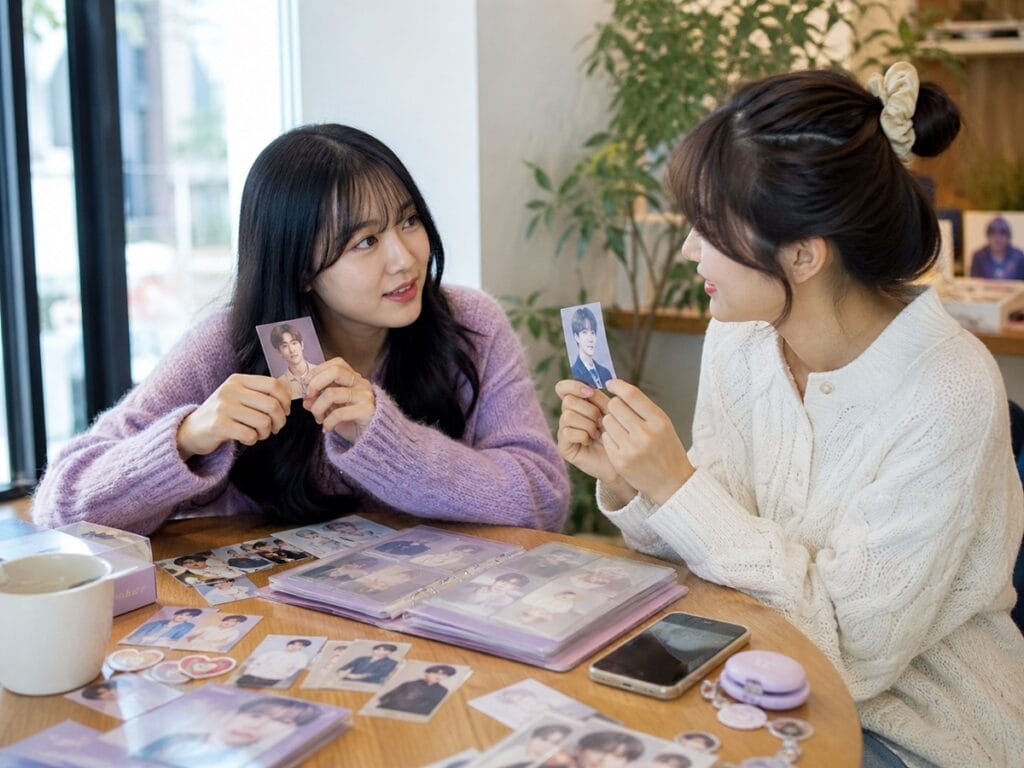
Today, many idol profiles include MBTI types. Fans talk about whether an idol is introverted or extroverted, emotional or logical, spontaneous or organized. Entertainment companies and variety shows often use MBTI as an easy way to create fun content around idol personalities.
For international fans, this can be surprisingly entertaining. A fan might not know Korean fluently, but they can still understand an idol’s MBTI type and compare it with their own.
That makes MBTI feel global.
Why Idol MBTI Works So Well
K-pop fandom is built around connection. Fans do not only care about music or stage performance. They also care about personality, habits, friendships, behind-the-scenes moments, and group chemistry.
MBTI gives fans a simple way to talk about those things.
For example:
- “That idol seems so ENFP.”
- “Their group dynamic makes sense.”
- “No wonder they are close.”
- “My bias has the same MBTI as me.”
This is where personality labels become part of fandom culture. They help fans feel closer to idols, even when the label is playful or imperfect.
Blood Type vs MBTI: What’s the Difference?
Blood type and MBTI are both used as personality labels in Korea, but they feel different.
| Personality Label | How It Feels in Korea | Common Use |
|---|---|---|
| Blood type | Old-school, simple, playful | Small talk, dating jokes, celebrity profiles |
| MBTI | Modern, detailed, trendy | Social media, dating apps, idol content, friendships |
| Both together | Easy personality shorthand | Conversation starter and cultural bonding tool |
Blood type personality is shorter and more nostalgic. MBTI feels more detailed and current. That is why younger Koreans tend to talk about MBTI more often today, while blood type still remains familiar as an older cultural reference.
In my view, MBTI became more powerful because it feels more personal. Four letters can create the feeling of a deeper explanation, even when people know the result is not perfect.
How Personality Labels Show Up in Dating Culture
Dating is one of the biggest reasons personality labels became so popular.
In Korea, people sometimes use blood type or MBTI to talk about compatibility. This does not always mean they truly choose a partner based on personality labels. Often, it is more about starting a conversation or creating a playful sense of chemistry.
For example, someone might ask:
“Are you an introvert or extrovert?”
“Would you date someone with the opposite personality?”
“Do you think our MBTI types match?”
These questions feel casual, but they can reveal real preferences. Some people want someone more emotional. Others prefer someone practical. Some like extroverted energy. Others want a calm and quiet partner.
Why Foreigners Find This Interesting
For foreigners, this can feel both funny and fascinating. In many countries, personality tests exist, but they may not appear as often in everyday introductions or dating conversations.
In Korea, the topic can come up quickly. That speed is what makes it feel unusual.
But once you understand the social role, it makes sense. Blood type and MBTI in Korea are less about strict judgment and more about creating an easy way to talk about personality.
Is It Science or Just Social Fun?
This is the important part.
Blood type personality has no solid scientific basis. MBTI is also debated and should not be treated as a complete psychological truth. A person cannot be fully explained by blood type or four letters.
But that does not mean the trend is meaningless.
Culturally, personality labels can still reveal how people want to understand themselves and others. They show what kinds of traits people notice, what they value in relationships, and how they talk about social chemistry.
So the better question is not:
“Is this 100% accurate?”
The better question is:
“Why do people enjoy using it?”
In Korea, the answer is simple. It is fun, fast, social, and easy to share.
Why Foreigners Find It Weirdly Fascinating
Foreigners often find this trend fascinating because it feels very specific to Korean social culture.
It is not just about taking a test. It is about how quickly personality labels enter daily conversation. It is about seeing MBTI in idol profiles, YouTube videos, dating apps, and friend groups. It is about watching people turn personality into a social language.
That is why the trend feels so “Korean” to many international viewers.
It is playful, but also revealing. It shows how much Korean culture values social chemistry, communication style, and emotional compatibility.
This is also why personality labels fit so naturally into K-pop culture. Fans are already used to analyzing group dynamics, idol images, and subtle personality differences. MBTI simply gives them another way to talk about it.
Final Thoughts: Why Blood Type and MBTI Still Matter in Korea
At first, Korea’s obsession with blood type and MBTI can seem strange. But once you look closer, it becomes easier to understand.
These labels are not just about personality tests. They are about conversation, connection, humor, dating, fandom, and identity.
Blood type personality gave Koreans a simple way to talk about character. MBTI gave younger generations a more detailed and modern version of that habit. Together, they show how Korean culture turns personality into something social, shareable, and sometimes surprisingly entertaining.
That is why blood type and MBTI in Korea continue to fascinate foreigners. They may not explain everything about a person, but they explain something important about Korean culture: people are always looking for better ways to understand each other.
For the record, I’m blood type AB — so apparently I’m supposed to be mysterious, unpredictable, and impossible to understand. My MBTI? Let’s just say it changes depending on my mood, my caffeine level, and how many K-pop updates I’ve seen that day.
For more K-culture stories, explore our latest Korean lifestyle and K-pop trend guides on KstarVibe.