

Why the BTS Story Still Feels Different
The BTS journey from 2013 to 2026 is not just a K-pop success story. It is the story of seven artists who started with a sharp debut message, built one of the most powerful fandoms in music, reached the top of global charts, paused for solo growth and military service, and returned to a world still waiting for their next move.
BTS did not begin as an obvious global phenomenon. They debuted in 2013 under Big Hit Entertainment with 2 Cool 4 Skool and the title track “No More Dream.” BIGHIT MUSIC’s official discography describes the album as BTS’s debut single album and identifies “No More Dream” as their debut track.
More than a decade later, BTS is no longer discussed only as a boy group. They are discussed as global artists, cultural symbols, solo performers, fashion figures, military-service returnees, and one of the most influential pop groups of the 21st century.
Their story is not a straight line. It is a timeline of risk, pressure, records, separation, service, and return.
2013: The Debut Era — Small Stage, Big Message
In 2013, BTS entered K-pop with a message that felt unusually direct.
Their debut image was not built around luxury or easy perfection. It was built around school pressure, youth frustration, dreams, identity, and the question of whether young people were living for themselves or for someone else’s expectations.
That message gave “No More Dream” a different kind of energy. BTS were rookies, but their concept already carried the emotional DNA that would later define them: ambition, rebellion, vulnerability, and self-questioning.
At the time, they were not stadium artists. They were not Grammy-nominated global stars. They were a rookie group trying to be heard in a crowded industry.
But the foundation was already there.
They were not only performing songs. They were building a voice.

2014–2016: The Years BTS Built Trust
Before BTS became a global name, they had to build trust.
From 2014 to 2016, their music and public image became more personal. They explored youth, anxiety, pressure, friendship, ambition, insecurity, and growth. Those themes helped fans feel that BTS was not just performing at them, but speaking with them.
This is where ARMY became central to the story.
BTS did not grow only through music shows and album releases. They grew through communication: behind-the-scenes clips, lyrics, livestreams, social media, and content that made fans feel close to the members as people.
That emotional closeness became one of their strongest advantages.
Before BTS became global icons, they became a group fans wanted to grow with.
2017: The Billboard Moment That Changed Everything
2017 was one of the biggest turning points in BTS history.
That year, BTS won Top Social Artist at the Billboard Music Awards. Billboard reported the win as a major moment that showed K-pop could compete and thrive on a global stage, with BTS beating major Western pop names in the category.
The award mattered because it was not only a trophy.
It showed that BTS had a fandom powerful enough to move international platforms. It also made many people outside K-pop ask the same question for the first time:
Who are BTS?
From that point forward, BTS were no longer only growing inside the K-pop system. They were entering the global music conversation.

2018–2019: From K-Pop Stars to Stadium Artists
By 2018 and 2019, BTS had moved beyond the label of “rising K-pop group.”
They were becoming international touring artists with a global audience. Their interviews appeared in major media, their concerts became cultural events, and their fandom was no longer limited by language or geography.
This period changed how people viewed K-pop’s global potential.
BTS showed that Korean-language music could carry emotion across borders. They did not become global by hiding their Korean identity. They became global while bringing Korean music, language, storytelling, and performance style with them.
That was the shift.
BTS were no longer proof that K-pop could travel.
They were proof that K-pop could lead.

2020–2021: Dynamite, Billboard No. 1, and Grammy Recognition
If 2017 opened the door, 2020 pushed BTS into another level of global recognition.
Their English-language single “Dynamite” debuted at No. 1 on the Billboard Hot 100, becoming BTS’s first Hot 100 leader and making history for a South Korean act on the U.S. singles chart.
The song also brought BTS major Grammy recognition. Korea.net reported that BTS received a Grammy nomination for Best Pop Duo/Group Performance for “Dynamite,” a landmark moment for a K-pop act.
This era mattered because BTS were no longer only a fandom-driven success story.
They were a chart force.
“Dynamite” was bright, retro, and easy to love, but its impact was bigger than one song. It proved that BTS could move from global fandom power to mainstream pop dominance.
2022: Proof, Solo Projects, and the Pause Before a New Chapter
In 2022, BTS entered one of the most emotional turning points of their career.
The release of Proof felt like a reflection on everything they had built so far. It was not simply another album cycle. It was a moment of looking back before moving into a more uncertain chapter.
That year, BTS discussed focusing more on solo projects. Reuters reported that a representative clarified the group was not disbanding or taking a complete hiatus, but would take time to explore solo projects while remaining active in different formats.
For fans, this was difficult but important.
It marked the transition from one version of BTS to another: seven members growing individually, preparing for military obligations, and leaving fans with one major question.
What would BTS look like when they returned?

2023–2025: Military Service and Individual Growth
Military service became one of the defining chapters of the BTS timeline.
For a global pop group, pausing full group activity at the height of influence could have been risky. But BTS’s military period became part of their long-term story rather than the end of it.
Members served at different times, while solo work helped keep each member’s identity visible. This period reminded fans that BTS was not only a group brand. It was also seven individuals with different voices, styles, and ambitions.
By June 2025, the full-group return became realistic. Reuters reported that RM and V were discharged in June 2025, followed by Jimin and Jung Kook, while Suga was the last member to complete service later that month.
That moment mattered because BTS were finally positioned to become seven again.

2026: The Next Global Chapter
By 2026, the BTS story feels different.
They are no longer the rookie group from 2013 trying to prove themselves. They are no longer only the Billboard breakthrough group from 2017. They are no longer only the global chart-toppers of 2020.
They are a group returning with history behind them.
BIGHIT MUSIC has announced BTS’s fifth album and a world tour, describing the album as the group’s first album in years and a fresh start for their new promotional activities.
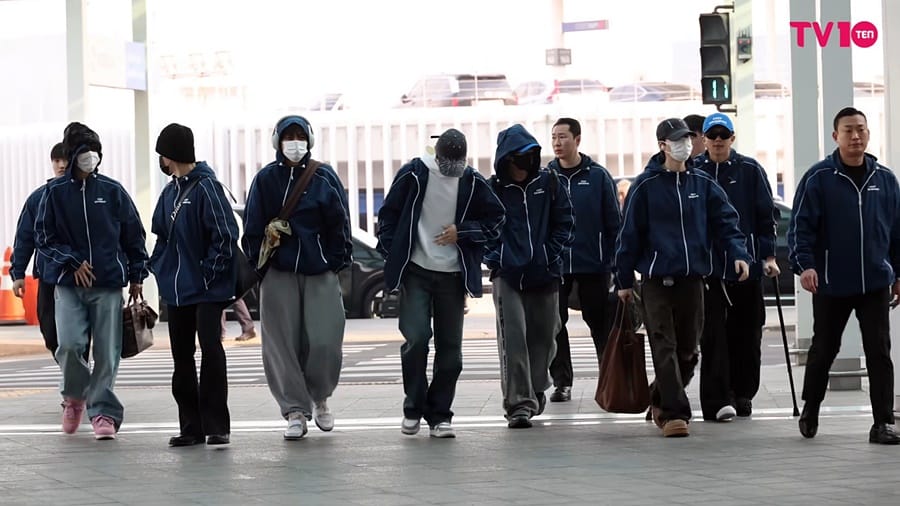
That is why a 2026 airport departure image feels symbolic.
Airport photos are already part of K-pop culture, but for BTS in 2026, the meaning is bigger. It is not only about travel, fashion, or fan cameras. It feels like movement.
A group that began on small stages is now stepping into another international chapter after solo growth, military service, and years of public expectation.
The message is simple:
BTS is still moving forward.
Why BTS Became More Than a K-Pop Group
BTS became global icons because their story combined several forces at once.
| Factor | Why It Mattered |
|---|---|
| Music | Their songs connected youth, pressure, love, identity, healing, and self-growth. |
| Fandom | ARMY became one of the most organized and emotionally invested fandoms in global music. |
| Performance | Their stage presence helped them move from idol group to stadium act. |
| Digital power | Social media helped BTS bypass traditional industry limits. |
| Authenticity | Fans felt they were watching real growth, not only polished branding. |
| Timing | BTS rose as global audiences became more open to non-English pop culture. |
| Resilience | Their military-service chapter made the return story even more emotional. |
The most important part is that BTS did not become global by erasing where they came from.
They became global while carrying Korean language, music, emotion, and culture with them.
That is why their influence continues.
For a broader look at today’s biggest K-pop names, see our ranking of the most popular K-pop idols in 2026.
Final Thoughts
The BTS journey from 2013 to 2026 is a story of transformation.
The BTS journey from 2013 to 2026 shows how one group moved from a small debut stage to global pop history.
In 2013, they were rookie artists asking young people what their dreams really meant.
In 2017, they proved that fan power could change global award stages.
In 2019, they showed that K-pop could reach stadium scale.
In 2020 and 2021, they reached Billboard No. 1 and Grammy recognition.
In 2022, they stepped into solo projects and a more personal chapter.
In 2025, military service brought the group closer to a full return.
In 2026, they are moving into another global era.
That is why BTS still matters.
Their story is not only about records. It is about what happens when a group grows up in public, survives pressure, changes the industry, and still finds a way to continue as seven.
The final airport image feels like the right place to end for now: not with a full stop, but with movement.
BTS is not just looking back at history.
They are walking toward whatever comes next.
Image Note
Images in this article are credited individually under each photo. Some images are used under Creative Commons licenses via Wikimedia Commons. Readers should refer to each image credit line for the original source and license information.
Recommended Sources
For official BTS discography and tour information, refer to BIGHIT MUSIC’s BTS pages. For chart, award, and military-service milestones, see Billboard, Reuters, AP, Korea.net, KBS World, and other major entertainment news sources.